From Two Products to One: Designing a Unified, Agentic Experience for Study Planning
Product Consolidation | Agentic AI | UX Strategy
Role: UX Manager
Team: UI Designer (direct report), UX Research, Product Management, Engineering, Stakeholders
Timeline: March 2026 to present | MVP delivered, agentic development in progress
Deliverables: Personas, JTBD framework, UX POV prototype, detailed designs, JTBD-to-autonomy map, UX North Star
The challenge
Two connected products supported early-stage study planning, but users had to move between them to get a single job done. That meant extra effort for users and a more complicated story for our sales team. The existing UI also needed to be modernized.
We set out to combine the two into one product with a modern interface that would be more efficient for users and a stronger offering for the business, while building toward an agentic future.
My role and approach
I led UX strategy for the combined product and managed a UI designer, guiding the research, defining the vision, and carrying it through to detailed design. I worked with product management, engineering, and stakeholders to prioritize and deliver.
Process
1. Understanding users and the landscape
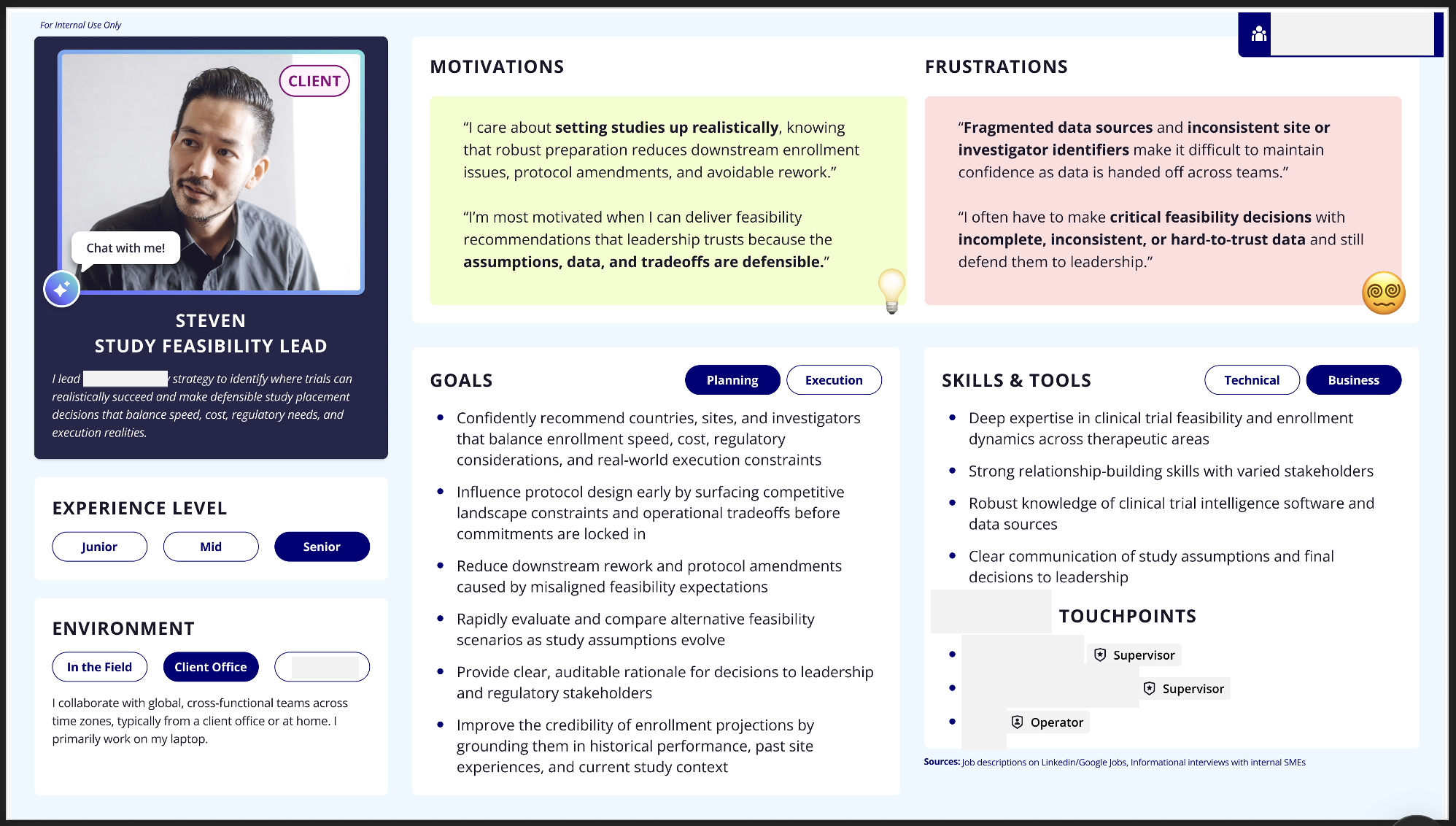
We spent time with users to understand their pain points and what each product needed to deliver to get their work done. We paired that with competitive research to see how others approach the space. The findings became personas and a set of jobs-to-be-done that anchored every decision that followed.
2. From happy path to detailed design
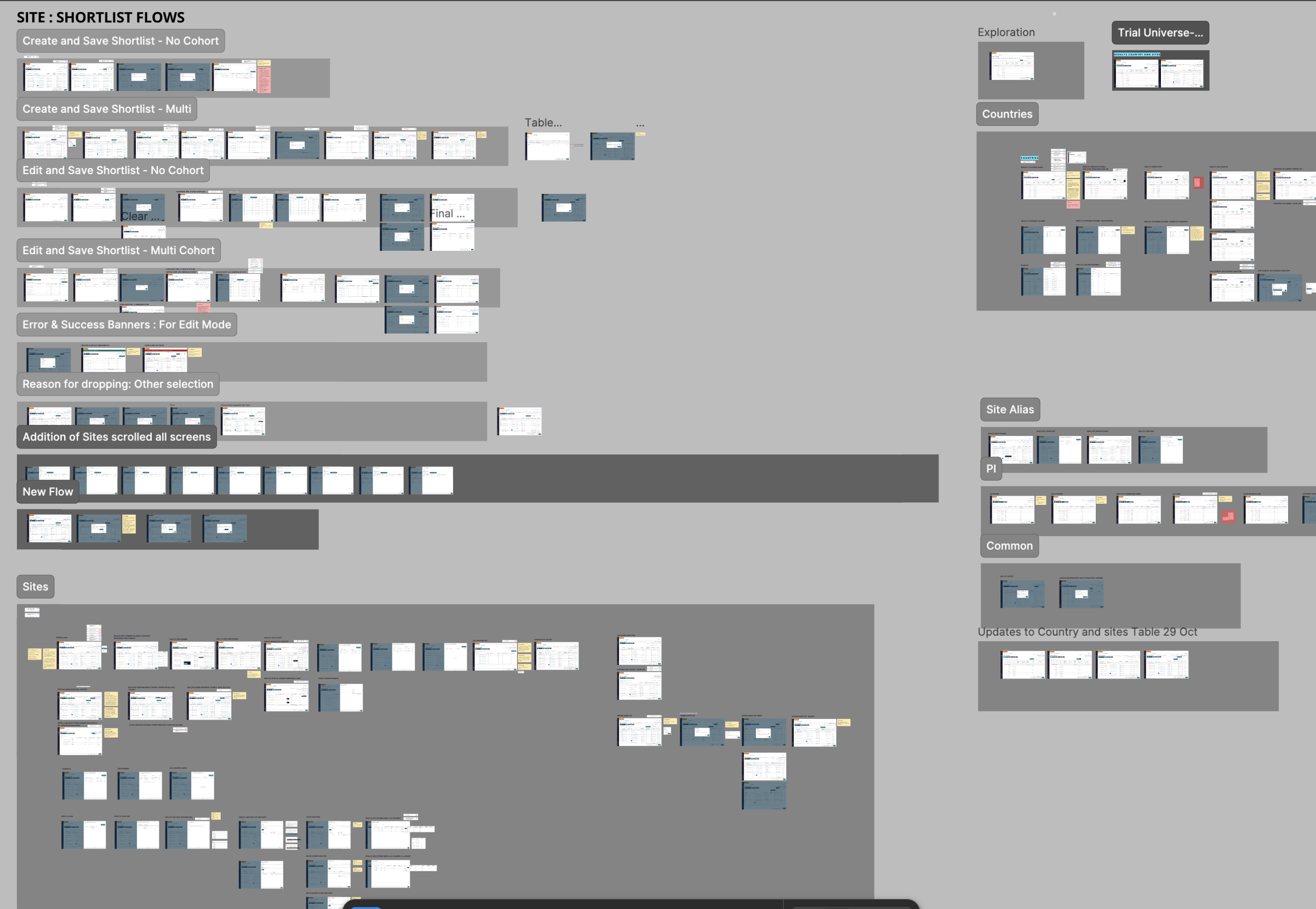
I created a UX point-of-view prototype of the ideal “happy path” through the combined product. That prototype became the basis for the workflows, which then evolved into detailed design with the UI designer I managed. Working closely with product management and engineering while piloting their SDLC delivery program, we prioritized what to deliver first.
3. JTBD to autonomy
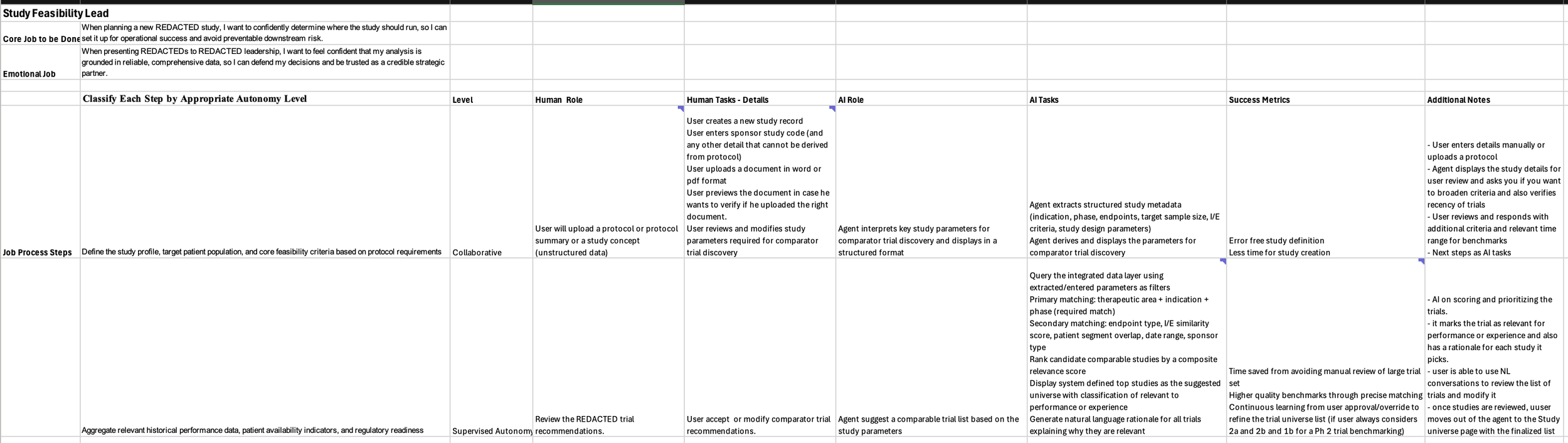
To decide what an agent should do in the MVP, we ran an exercise we called JTBD to autonomy. We broke each job into specific tasks, then assigned each task to either the user or the agent. We also marked the touchpoints where user input would be required, so humans stayed in the loop at the moments that mattered.
This gave us a practical way to choose an agentic workflow we could reasonably deliver in the MVP, and a shared language for talking about autonomy with product and engineering.
4. Defining the UX North Star
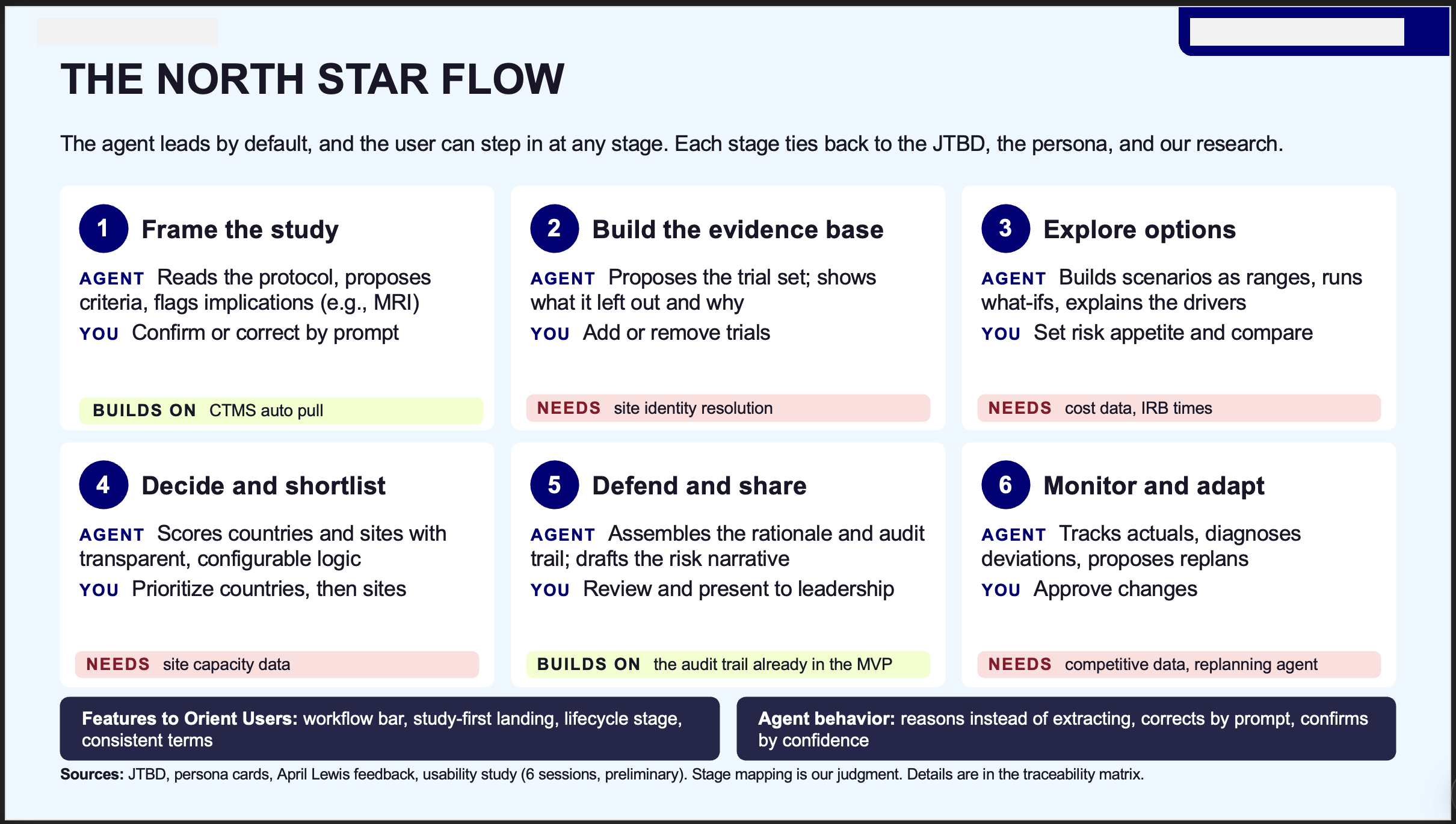
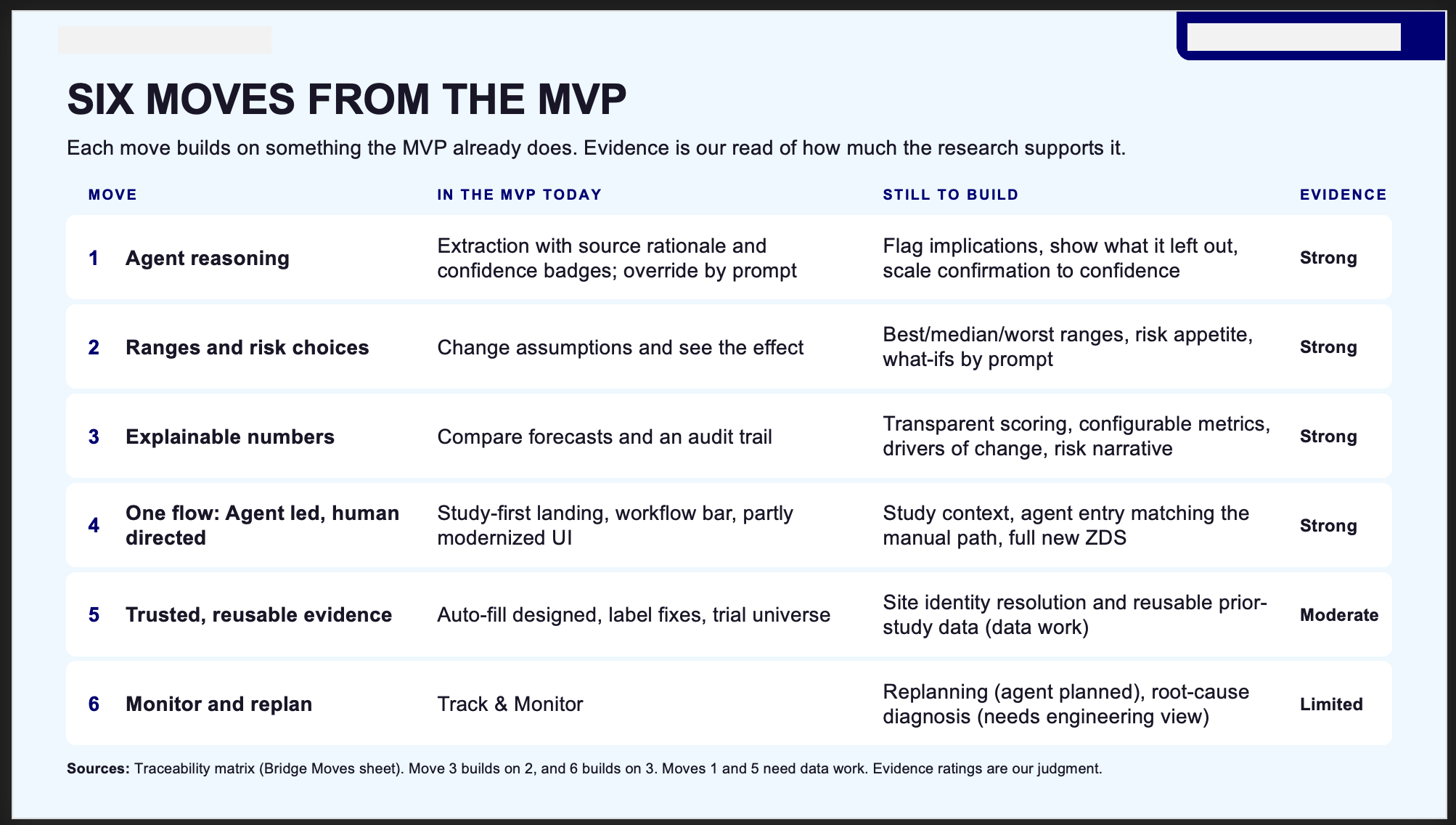
With the MVP and an agentic prototype delivered, we looked further ahead. The UX North Star lays out six steps from the MVP to a fully agentic vision and explains how we get from one to the next. Working with stakeholders and product management, we turned it into a prototype that is now being prioritized.
The solution
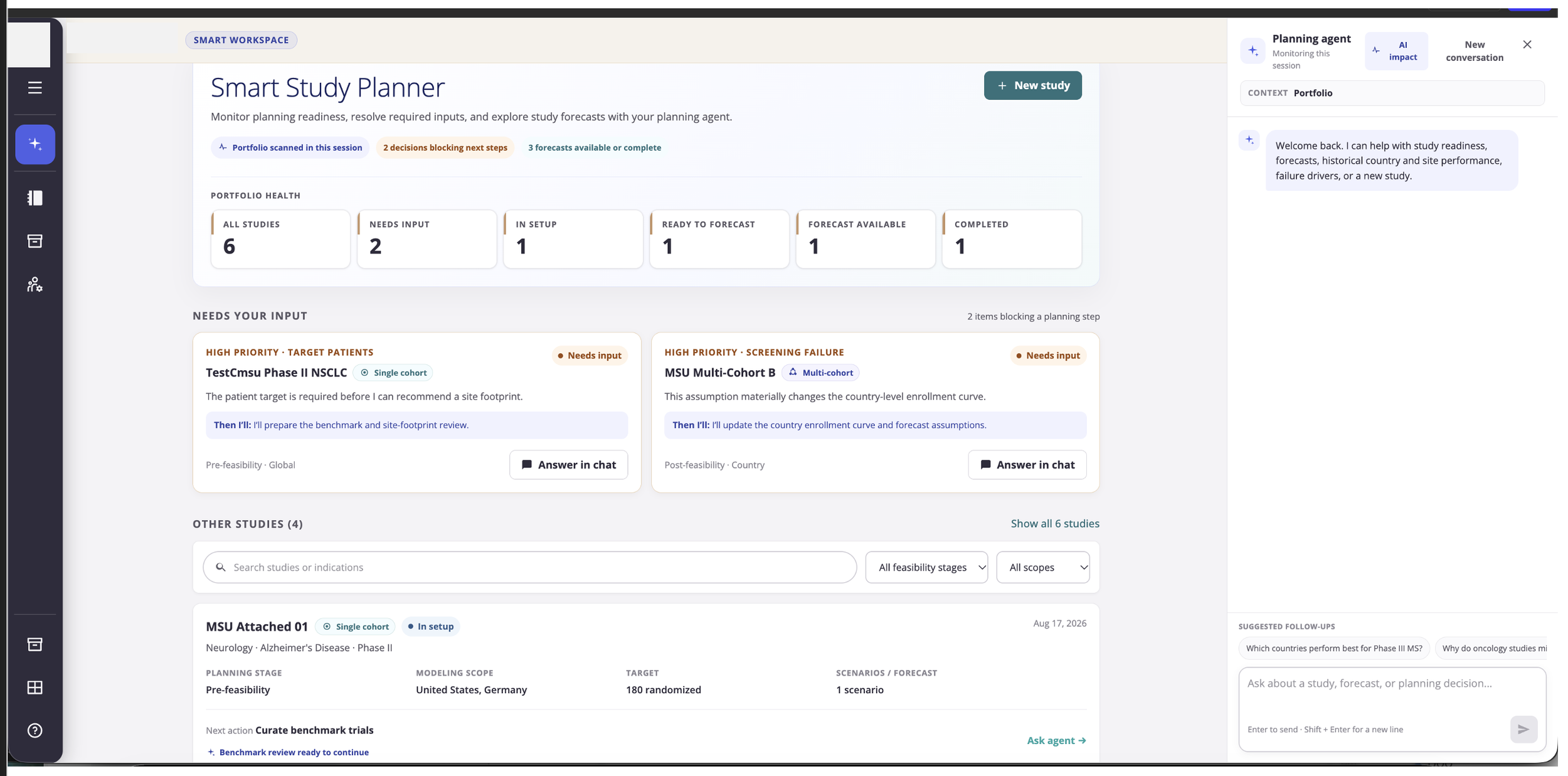
The combined product brings both capabilities into one experience with a modernized interface, so users no longer have to move between tools to complete their work. Agentic capabilities take on the right tasks, and users stay in control through clear input points.
Where it stands
MVP delivered
Agentic prototype delivered and in active development with engineering
UX North Star prototype being prioritized
Reflection
Designing for agents starts with deciding who does what. Mapping jobs to tasks, and tasks to the user or the agent, made autonomy something the team could plan, prioritize, and build toward in steps. The North Star gives everyone a shared destination while keeping each step realistic.
Last updated: November 2026