From Trigger to Launch-Ready Assets: Designing an Agentic Content Workflow for Brand Teams
Agentic AI | Content Generation | Client Pilot
Role: UX Manager
Team: UX Research Lead, Product Management Senior Director, Client Engagement
Timeline: August 2026 to present | Pilot in progress
Deliverables: Persona, JTBD framework, interactive prototype
Research at a glance: 3 client users interviewed | 9 internal client-facing stakeholders consulted | 2 client prototype reviews | More client sessions in progress
The challenge
Brand managers faced a slow, costly path from a marketing trigger to finished assets. Each project meant extended back-and-forth with an agency, and every asset needed supporting documentation, including traceable claims and MLR (medical, legal, regulatory) materials. The result was too much time between trigger and assets, and too much spend on agency iterations.
We were asked to design an agentic solution for a client pilot that would take a brand manager from trigger to project brief to marketing assets, with the required documentation generated along the way.
My role and approach
I led UX strategy for the pilot and guided the research direction, partnering with a UX Research Lead who conducted the client interviews. I then worked directly with client engagement and our product management senior director to turn what we learned into a prototype.
Process
1. Understanding the workflow
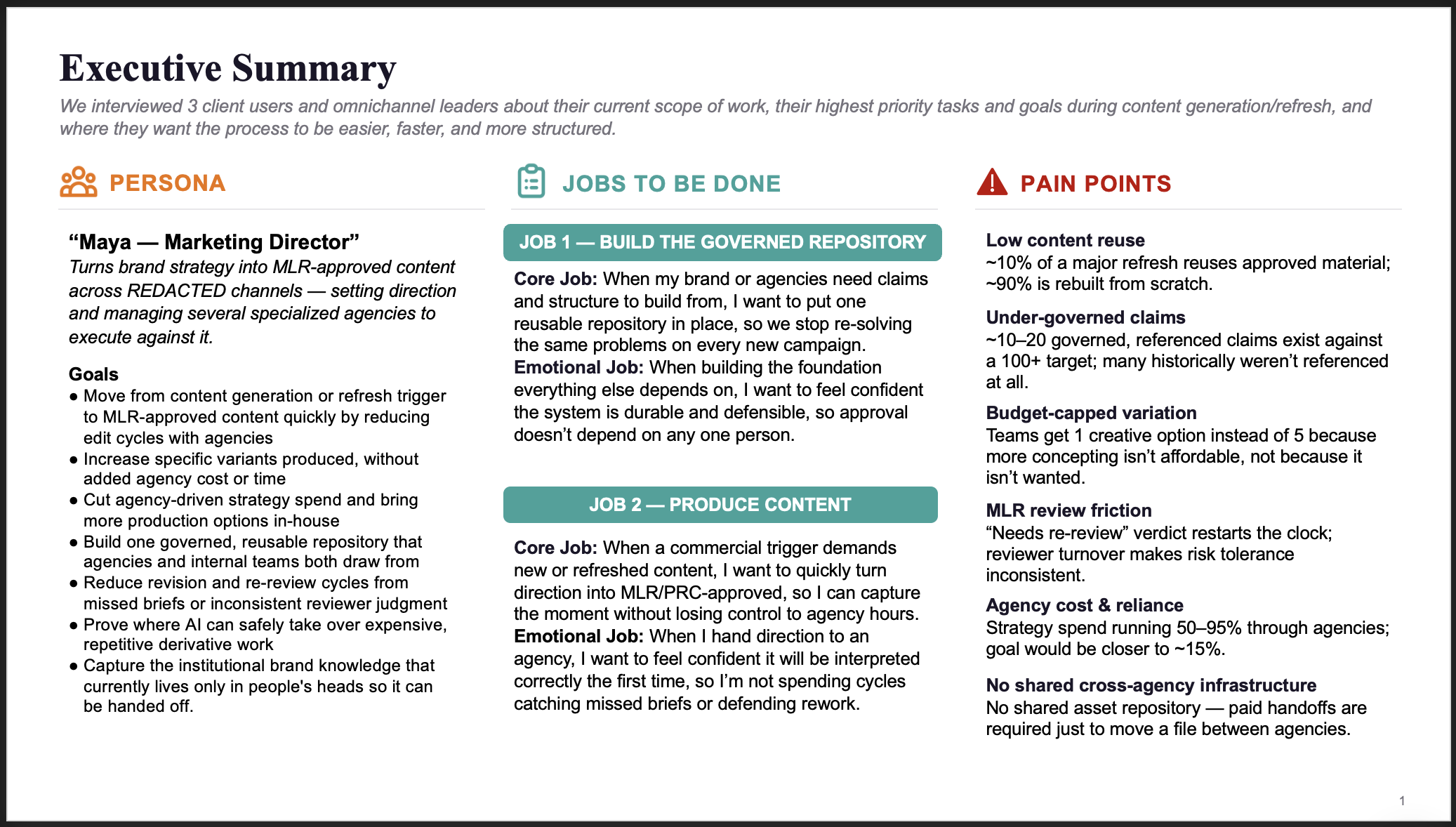
Working with our UX Research Lead, we interviewed three client users about their current workflows, roles, and the outcomes that matter most to them, including where a tool like ours would fit and where it wouldn’t. Because direct client access was limited, we also drew on internal stakeholders who work with these clients every day.
2. Defining who and what we were designing for
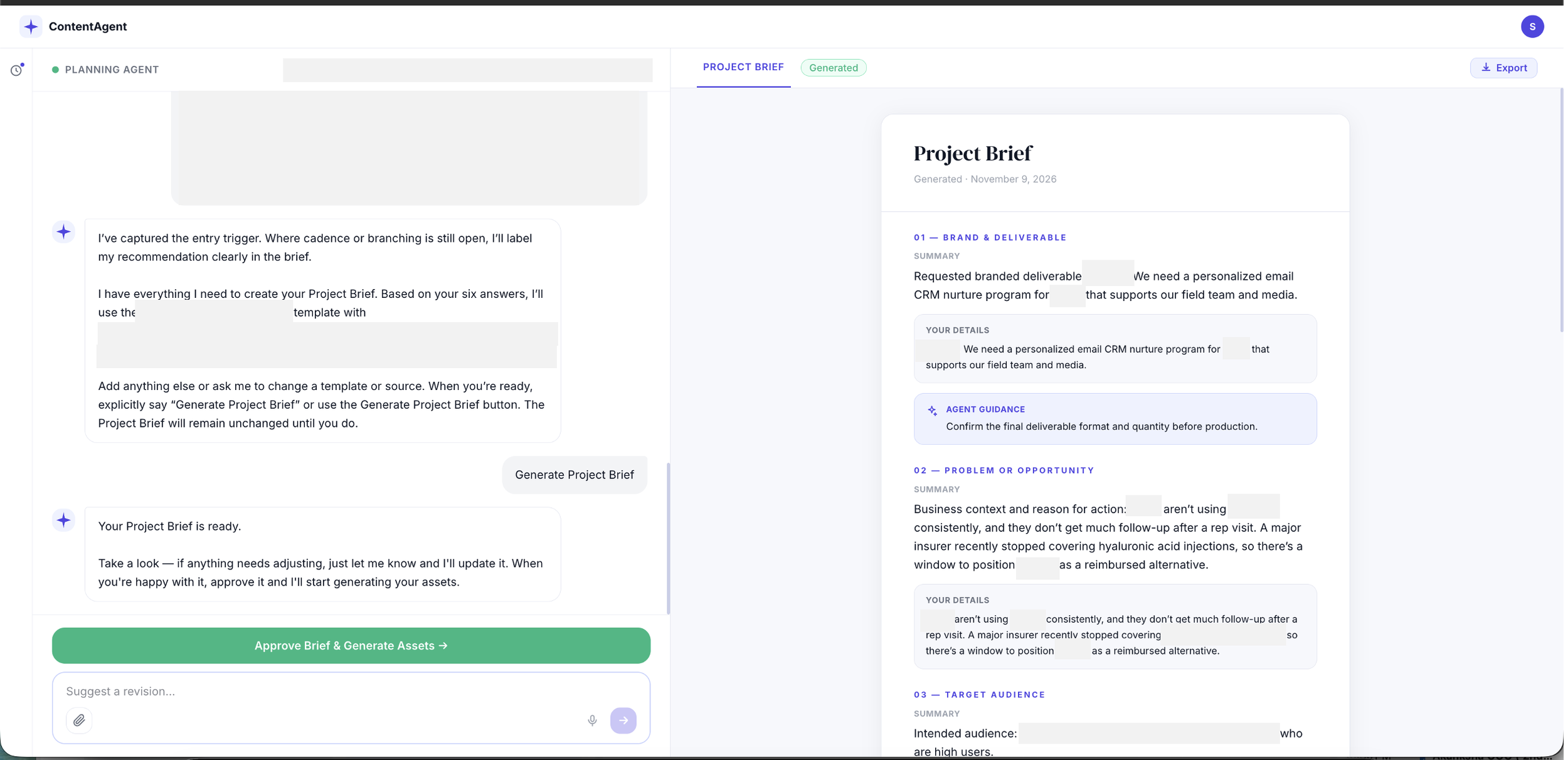
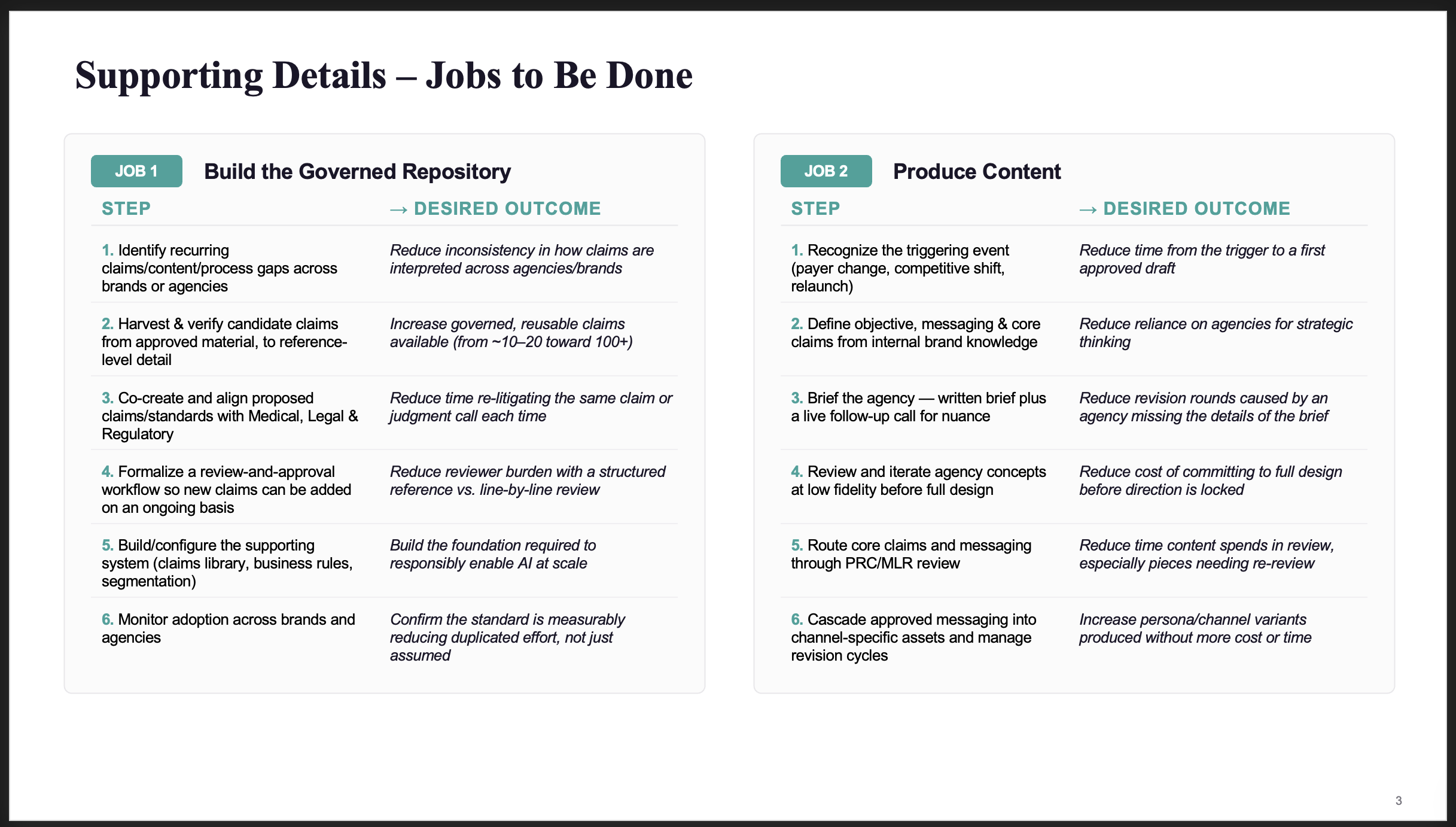
The research became a persona and a set of jobs-to-be-done that every design decision could be mapped back to.
3. Prototyping and refining
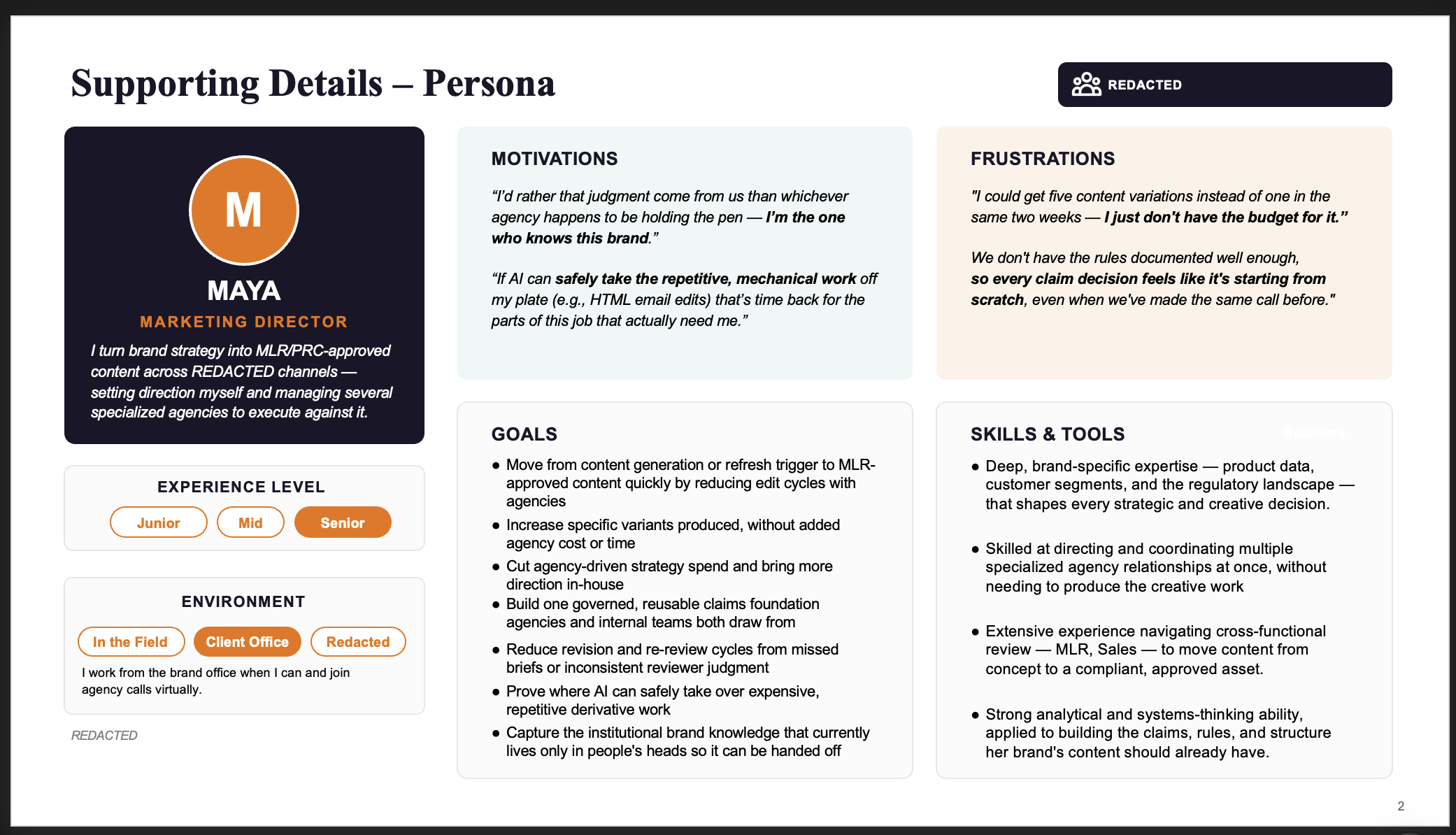
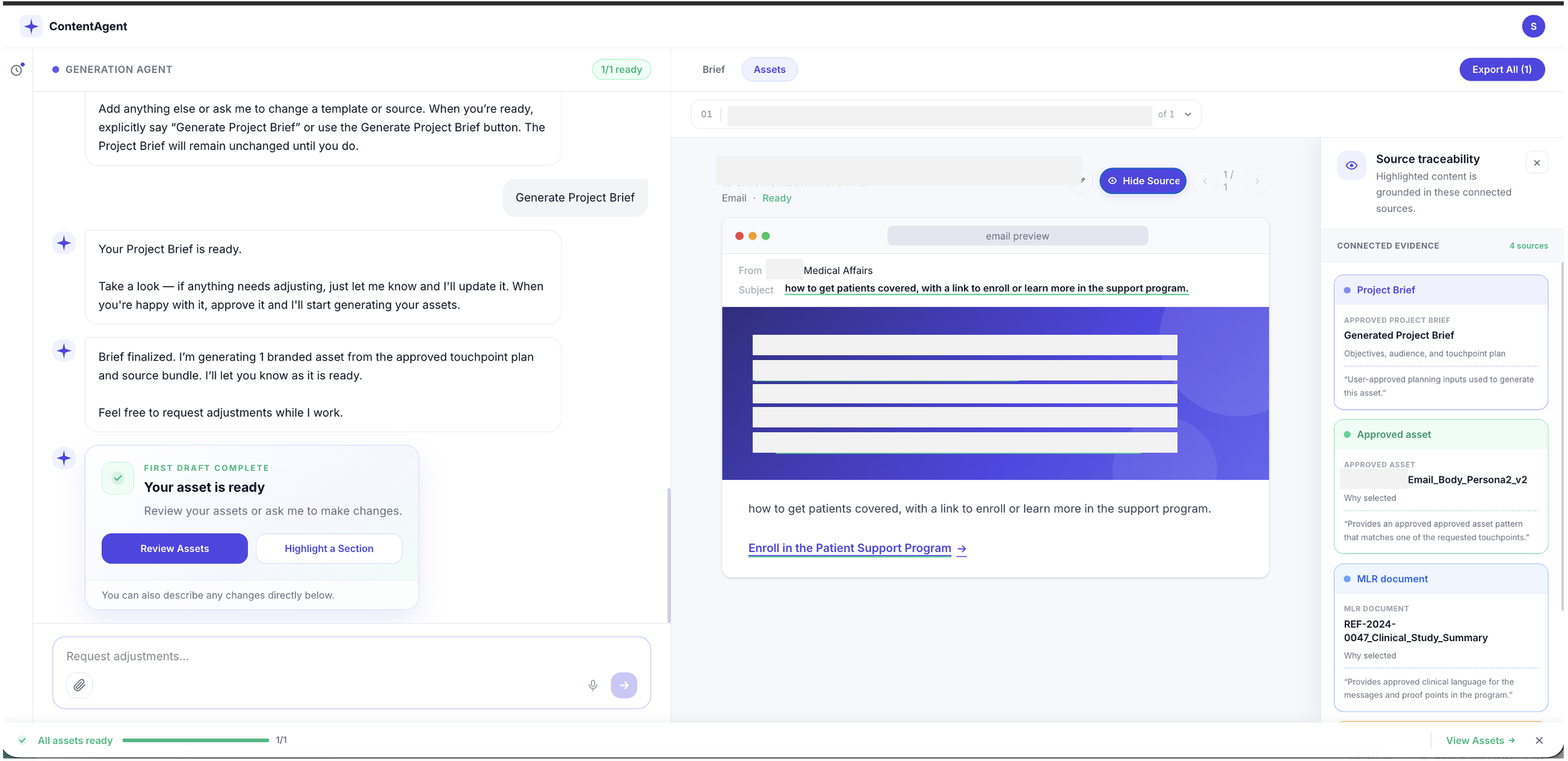
I built a prototype that takes a brand manager from trigger to brief to launch-ready assets, with traceable claims and MLR documentation built into the flow. I then refined it in feedback sessions with nine internal stakeholders who work directly with clients, who reacted very positively.
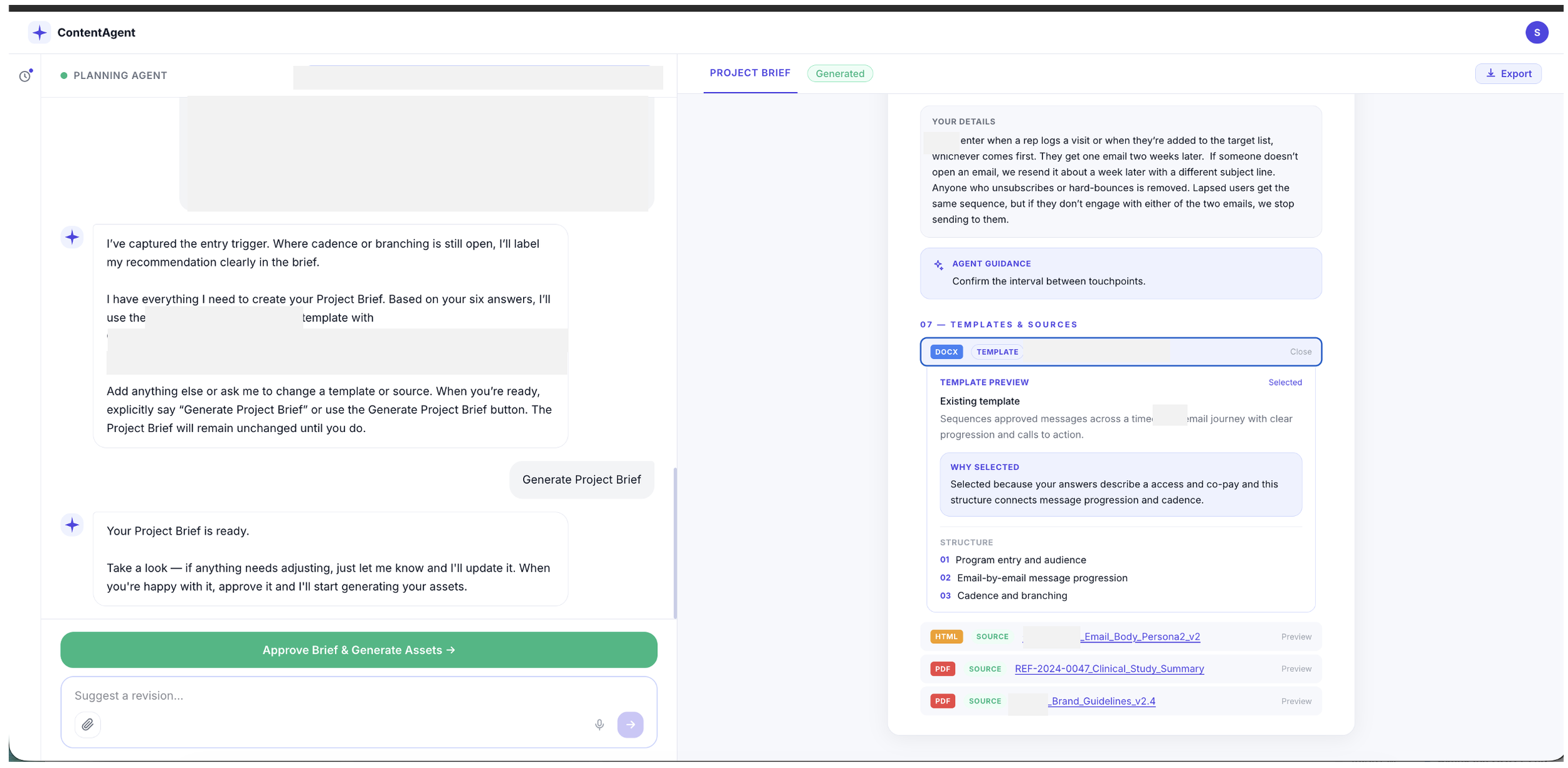
Their feedback led to two meaningful changes. We moved template selection earlier in the workflow, and we surfaced more of the underlying details at each step. Both changes gave users more transparency into what the agent was doing and more points to make their own decisions, keeping a human in the loop.
From there, I walked a client user through the prototype. We then generalized it and reviewed it with a second client to see whether the workflow held up beyond a single organization.
The solution
The agent does the heavy lifting, but the brand manager stays in control. Template selection happens early, and the details behind each step are visible, so users can review and adjust before anything moves forward.
Results
“This makes total sense. Like super easy, user friendly.”
Client brand manager, prototype review
After walking through the prototype, our first client user confirmed this was the workflow she wanted to see and that it addressed her two biggest problems: too much time between a trigger and finished assets, and too much spend on agency back-and-forth. From a marketing perspective, she said, it was “easy peasy.”
A second client, who saw a generalized version, reacted the same way. She called the experience “very clear” and singled out the project brief step: “Having it generate a project brief, I think that was very clear and it seemed like it was very easy to use.”
We’re continuing to review the prototype with additional client users as the pilot moves forward.
Reflection
Feedback showed that in agentic workflows, trust comes from visibility. Users didn’t want less automation, they wanted to see what the agent was doing and step in at the right moments. In a regulated space, that means human review and traceability have to be part of the experience from the start, not added afterward.
Last updated: November 2026